Checkatrade vs Google Business Profile for UK Trades (2026)

The short answer: these are two different things, not two versions of the same thing. Checkatrade is a paid directory membership where you rent exposure inside someone else's audience. A Google Business Profile is a free listing you control that feeds Google Search, Google Maps and, increasingly, AI assistants. Most established UK trades end up using both, but only one of them is an asset you keep when you stop paying.
This guide compares the two on the things that actually decide whether the money was worth it: the cost model, who owns the customer, how reviews behave, enquiry quality, and what is left behind after twelve months.
What each one actually is
Checkatrade is a subscription directory. You pay to be listed and vetted, and your profile appears alongside other members when a homeowner searches within that platform or finds it through Google. Membership terms, pricing, vetting requirements and how contacts are distributed are set by the provider and change over time, so check the current terms directly before signing anything.
Google Business Profile is the free listing that produces the map pack and the business panel in Google Search. It is available only to businesses that make in-person contact with customers, which includes service-area trades working from a real base. There is no listing fee. The cost is the work of keeping it accurate, gathering genuine reviews and responding to enquiries.
Side-by-side comparison
| Factor | Checkatrade (paid directory) | Google Business Profile |
|---|---|---|
| Cost model | Recurring membership under provider terms, and in some plans additional charges tied to contacts or placement | No listing fee. Cost is time, or a management fee if you outsource it |
| Who controls visibility | The provider decides ranking, placement and how contacts are shared | Google decides ranking using relevance, distance and prominence. You control accuracy, services, hours, photos and reviews |
| Audience | People already on that platform, plus traffic the platform wins in Google | Everyone searching Google or Maps for your service in your area, plus AI assistants that read public business data |
| Reviews | Held on the provider's platform under their rules | Held on your Google profile and visible directly in Search and Maps |
| Ownership if you cancel | Listing and its review history stop working for you | The profile and its review history remain yours |
| Competitor exposure | Your profile sits next to direct competitors by design | Your panel is your own, though the map pack still shows rivals |
| Enquiry qualification | Depends on the plan and how the provider routes contacts | Customer contacts you directly through call, message, form or directions |
| Effect on AI answers | Indirect. Assistants may read the directory page rather than your business | Direct. Profile facts, categories and reviews are commonly used public signals |
No row makes either option automatically wrong. A directory that fills gaps in a quiet month is doing a job. The point is to know what you are buying.
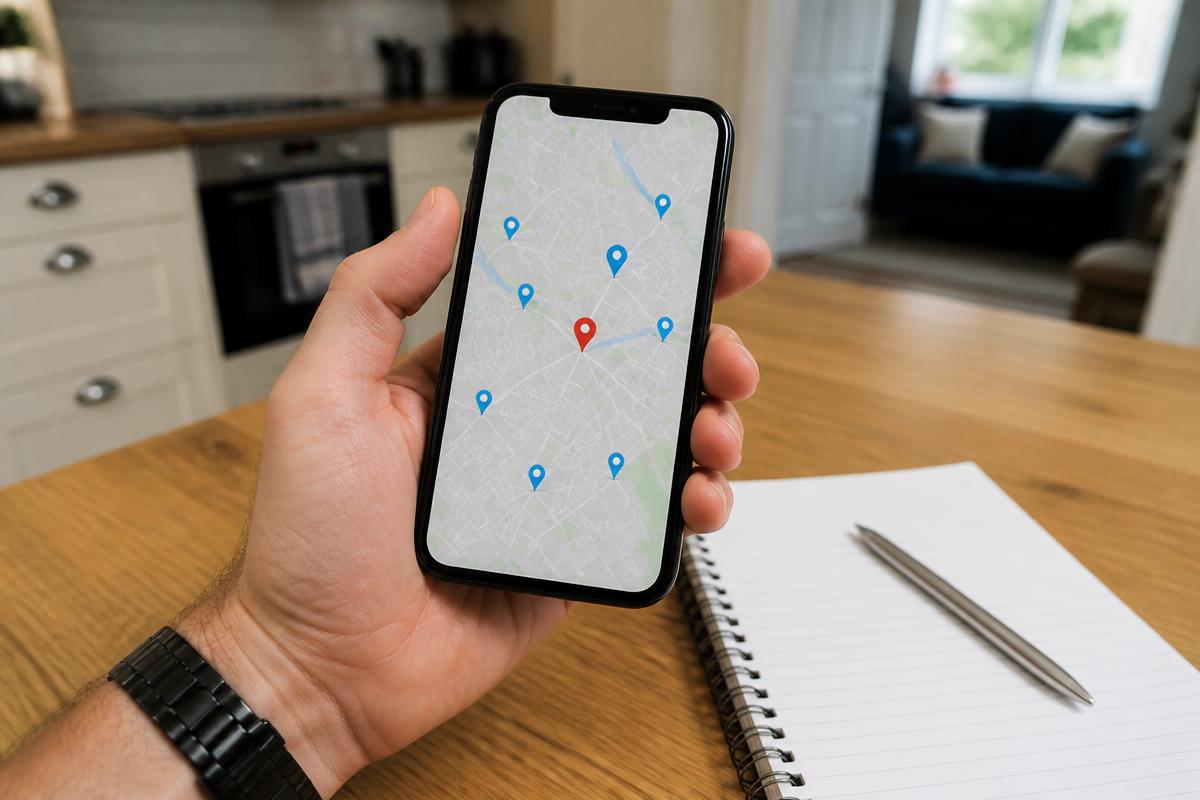
Cost per enquiry, honestly measured
Most trades compare the two on the monthly invoice. That is the wrong number. The right number is the cost of an enquiry you actually wanted, and then the cost of a job you actually won.
Track four things for every channel, including word of mouth:
- Total contacts received.
- Contacts that were in your services, your area and your availability.
- Quotes issued.
- Work won and its value.
A directory that produces plenty of contacts can still be poor value if most are outside your scope, shared with several other members, or arrive when you have no capacity. A profile that produces fewer contacts can be better value if those callers already chose you. You cannot know which is true for your business without recording it, and no provider's own dashboard is a substitute for your own record.
Be careful with any comparison, including this one, that quotes a fixed cost per lead. Directory pricing varies by trade, area, plan and year, and enquiry quality varies by month. Use your own numbers.
The asset argument
This is the difference that matters over years rather than months.
Stop paying a directory and the exposure ends that day. The reviews you collected stay on their platform. The profile you built promotes the platform, not you.
A Google Business Profile behaves the opposite way. Every genuine review, accurate service, correct opening time and real photo accumulates on something with your name on it. It keeps working when you pause your advertising. It is also the record that AI assistants read when someone asks a chatbot for a plumber or an electrician in your town, which is a growing share of how people now start the search. Our guide to answer engine optimisation explains how those systems use public business data.
That does not mean a profile ranks by itself. Google's own guidance describes relevance, distance and prominence, and there is no field, review count or posting schedule that guarantees a position in the map pack.
Reviews behave differently
On a directory, reviews are a membership feature. They build trust inside that platform and help the platform rank.
On Google, reviews appear directly under your business name in Search and Maps, they influence whether a searcher calls you rather than the next result, and they are frequently quoted back by AI assistants. Replying to them publicly is part of how a profile looks maintained.
Both need the same discipline: ask every genuine customer, ask soon after the work, make it a one-tap request, and never incentivise or filter reviews. Most trades lose reviews not because customers were unhappy, but because nobody asked while the job was fresh.
When a directory still makes sense
Being clear-eyed cuts both ways. A paid directory can be a reasonable buy when:
- You are new, have almost no review history anywhere, and need work while your own presence builds.
- Your customers in your area genuinely use that platform to shortlist trades.
- You have the capacity to answer quickly, because shared contacts usually go to whoever replies first.
- You have read the current terms on cancellation, contact distribution and tracked phone numbers.
It is a poor buy when it is the only thing you do, when you cannot say what an enquiry costs you, or when you are paying for exposure while your own profile sits half filled in.
What to do first if budget is tight
If you can only do one thing this month, do the free one properly.
- Claim and verify your Google Business Profile, if your business is eligible.
- Fix the basics: exact business name, correct primary category, real services, honest opening hours, genuine coverage, working phone and a website link that matches.
- Add real photos of real work, not stock images.
- Put a review request into your job-completion routine and reply to every review you receive.
- Answer enquiries fast, and make sure missed calls get a reply rather than nothing.
Then, if you still want extra exposure, add a paid channel and measure it against the numbers above.
Where LokAgent fits
LokAgent does not sell leads and does not promise rankings, job volume or a place in the map pack. What it does is take the repeated work off your hands: reviewing what your public profile and website currently show, prioritising the gaps, prompting review requests, drafting replies, and making sure a missed call gets an immediate text back instead of going to a competitor.
Start with the free Google Business Profile audit to see what a customer and an AI assistant can currently find about you, or read the local SEO service page for how the foundations are prioritised. If your interest is specifically whether chatbots mention you, the AI search visibility audit documents that single check.
Frequently asked questions
Is Checkatrade worth it for a UK tradesperson?
It depends on your trade, your area, your current review history and your capacity to respond quickly. Judge it on the cost of enquiries you actually wanted, measured in your own records over at least three months, not on the contact count in the provider's dashboard.
Can a Google Business Profile replace a directory membership?
It can for some trades and not for others. A profile reaches a much larger audience and is yours to keep, but it takes time to build review history and it does not guarantee placement. Many businesses run both and then drop whichever fails to pay for itself.
Do Checkatrade reviews help my Google ranking?
They are not the same thing as Google reviews and they do not appear on your Google profile. Third-party review presence can contribute to how established a business looks overall, but reviews on your own profile are the ones shown to searchers in Google and Maps.
Which one helps me show up in ChatGPT or Google AI Overviews?
Assistants read public information. An accurate, consistent Google Business Profile plus a clear website describing the same services gives them something to quote. A directory listing may be read too, but the answer then points at the directory rather than at you. No approach can guarantee a mention.
Substantively reviewed 30 July 2026.