What AEO specialists do in the UK
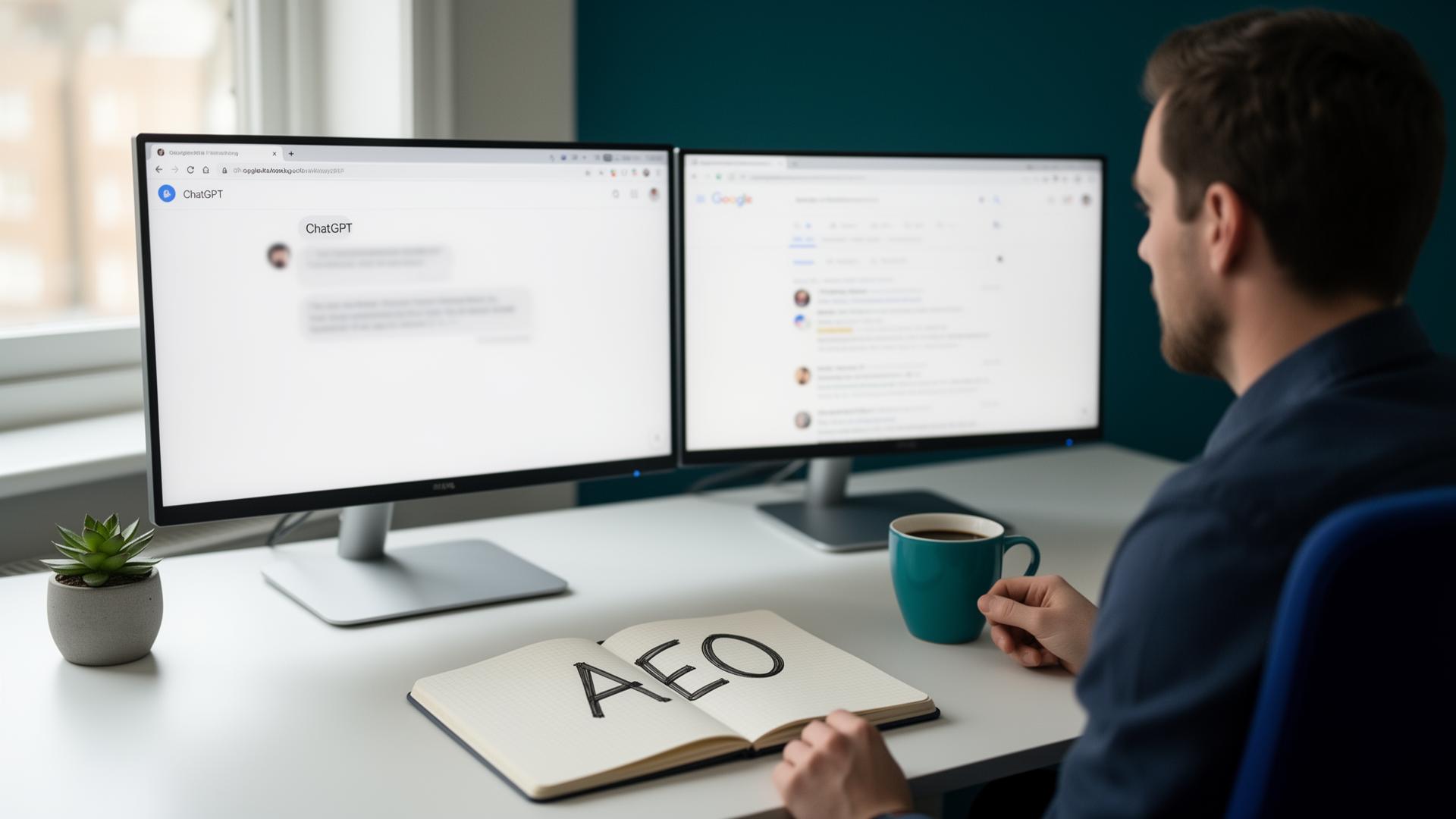
An AEO specialist improves public information so search engines and answer systems can discover it, understand it, extract a useful answer, and identify its source. The work overlaps heavily with technical SEO, content design, entity clarity, and evidence management. A specialist can improve a page and document how it is tested, but cannot control whether a search or AI system indexes, ranks, mentions, or cites it.
What is an AEO specialist?
An Answer Engine Optimisation specialist identifies the questions a business should answer, decides which page should own each answer, verifies the underlying facts, and makes the result easy for people and machines to interpret. The role is not a replacement for SEO. A page still needs sound crawl access, indexing signals, useful content, internal links, and a clear purpose before answer-focused improvements can help.
The specialist should also separate improvement work from measurement. Improving a page is AEO delivery. Checking whether a named organisation appears for a particular query, system, location, and date is an AI visibility observation. Those activities inform each other, but one observed result does not prove coverage across every answer engine or predict a future citation.
For a plain-language explanation before comparing providers, read what Answer Engine Optimisation means. LokAgent's commercial scope is described on the LokAgent homepage.
What work should an AEO specialist actually do?
A credible engagement should produce inspectable work, not just a score or a list of prompts. The exact scope depends on the site, audience, evidence, and technical platform, but the main workstreams are consistent.
| Workstream | Useful output | Important boundary |
|---|---|---|
| Question research | A prioritised list of real customer and stakeholder questions | Search volume alone does not prove that a question belongs on the site |
| Intent and page ownership | One suitable page owner for each important question | Do not create multiple near-identical pages for wording variants |
| Source verification | A record of the fact, source, owner, review date, and limitation | An unsupported claim does not become reliable because it is written clearly |
| Answer design | A direct opening followed by scope, evidence, qualification, and next action | Short answers are not automatically better than complete, useful answers |
| Technical search review | Crawl, indexability, canonical, initial HTML, internal-link, and status checks | A crawler policy rule does not by itself prove real access through a CDN or firewall |
| Entity clarity | Consistent names and relationships for the organisation, services, products, and authors | Do not invent an address, biography, accreditation, or service area |
| Structured data | Markup that describes the same facts visible on the page | Schema cannot add missing evidence or force a search feature |
| Editorial validation | A check that headings, links, dates, sources, and claims remain coherent | Updating a date without substantive review is not an improvement |
| Measurement | Dated search and answer observations with the exact test conditions | A single query is not a universal visibility score |
Google's current generative-AI search guide frames AEO and GEO work for Google as SEO, not as a separate set of hacks. A specialist should explain how the work strengthens useful content and normal search eligibility. The plain-language AEO guide owns the deeper comparison between SEO, AEO and visibility measurement. LokAgent's free visibility audit separately records one documented, Google-grounded query.
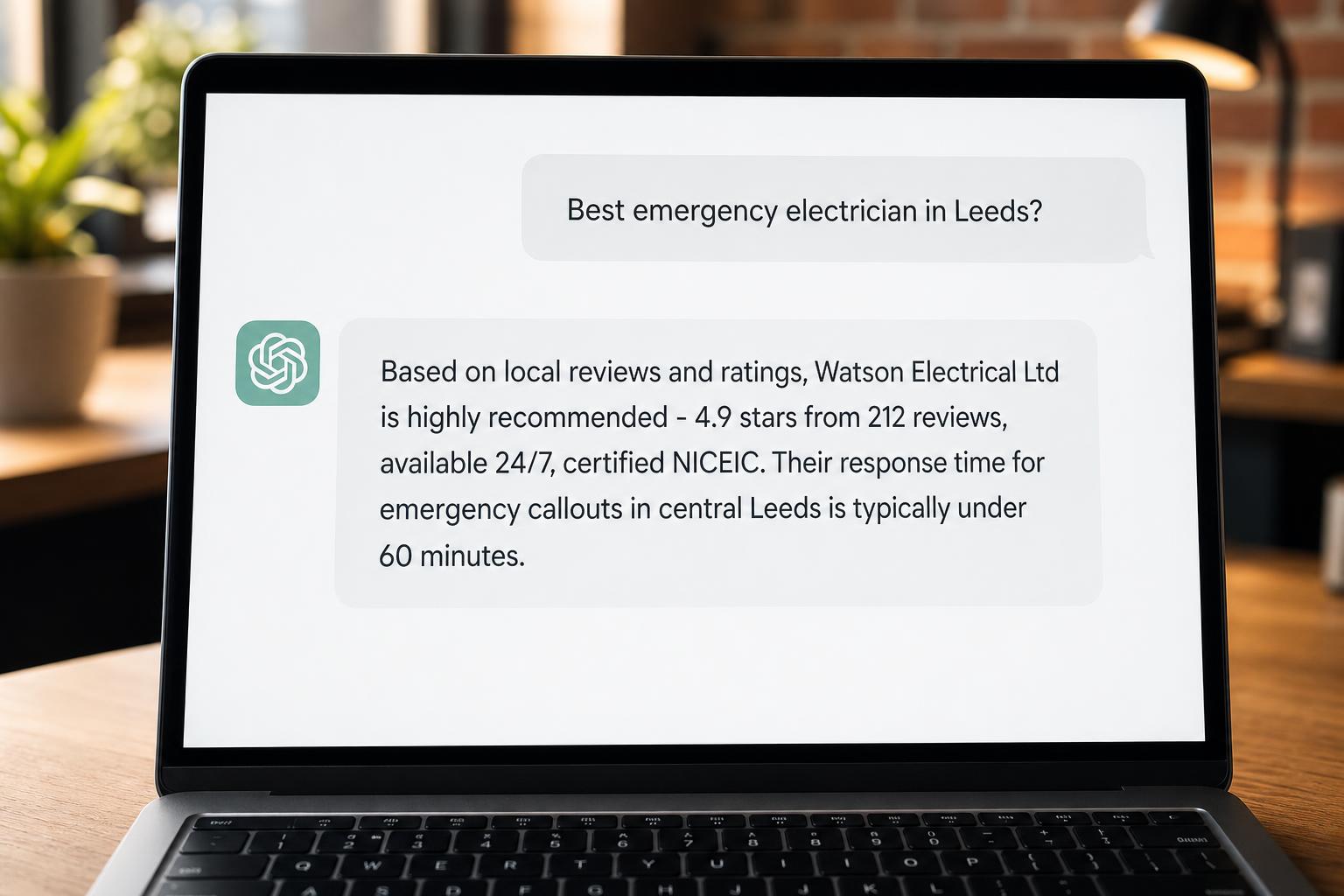
What should a sensible engagement process look like?
- Define the decision questions. Start with questions that affect whether a reader can understand, compare, trust, or act on the offer. Record where each question came from.
- Choose the page owner. Match every question to one canonical page. Consolidate duplicates and use contextual links when another page owns the deeper explanation.
- Verify the answer. Record the first-party fact or authoritative source, its scope, and anything the answer must not imply.
- Improve the visible page. Put the direct answer before supporting detail. Use clear headings, real examples, useful tables, and descriptive links where they help the reader.
- Align the technical output. Make the final title, description, canonical, primary copy, and relevant structured data agree with the visible page. Important content should be available reliably to the intended crawlers.
- Validate the release. Test status codes, raw and rendered HTML, links, structured data, mobile output, and indexability. Check that no old claim remains in cards, templates, or machine-readable files.
- Measure on a declared basis. Record Search Console outcomes separately from system-specific answer observations. Preserve the query, date, context, and coverage limits for later comparison.
The process should remain reproducible. If a provider cannot show what changed or explain the basis of a score, the result is difficult to audit and maintain.
What evidence should you ask an AEO specialist to provide?
Ask for artefacts you can inspect after the engagement ends.
- A question and intent map showing why each question matters and which URL owns it.
- A source register for material facts, including who maintains each source and when it should be reviewed.
- Before-and-after page copy or a clear content diff, not only screenshots of a score.
- Technical evidence for crawl status, indexability, canonicals, initial HTML, and internal links.
- A structured-data report that compares markup with the visible page and identifies unsupported properties.
- Exact measurement conditions for any AI search observation, including the system, query, date, location or context, and surfaced sources where available.
- A list of unknowns and exclusions. Owner-only data, blocked crawlers, unavailable logs, or untested systems should stay unknown rather than becoming a failed score.
- A maintenance plan that names the page owner, source owner, and trigger for a substantive review.
The same principle applies to any provider: evidence should support the statement being made, not a broader claim.
How to assess an AEO specialist in the UK
Use this checklist during a proposal or discovery call.
| Check | Strong answer | Warning sign |
|---|---|---|
| Scope | Names the pages, questions, outputs, dependencies, and exclusions | Promises broad visibility without defining the work |
| Search foundations | Reviews crawl, indexability, canonicals, internal links, and useful content | Describes AEO as separate from normal technical SEO |
| Evidence | Requires maintainable first-party facts or authoritative sources | Offers to manufacture expertise, reviews, locations, or proof |
| Page ownership | Assigns one canonical owner to each intent | Proposes many thin pages for small keyword variations |
| Structured data | Uses only relevant markup that matches visible content | Treats FAQ, LocalBusiness, or review schema as a universal shortcut |
| Platform claims | Refers to current first-party platform guidance and states uncertainty | Claims to know secret model weights or guaranteed citation factors |
| Crawler policy | Separates search retrieval crawlers from training crawlers | Says model training access is required for search visibility |
| Measurement | Records exact queries and conditions, then labels coverage | Reports an opaque universal score from a small prompt set |
| Reporting | Shows changes, evidence, limitations, and next actions | Delivers only a dashboard or long automated report |
| Commercial fit | Explains what requires specialist judgement, developer work, or client input | Presents automation as a substitute for verification and accountability |
Price alone cannot tell you whether the work is appropriate, and there is no evidence-led universal price range in this guide. Compare the defined scope, implementation ownership, evidence standard, testing depth, reporting, and maintenance responsibility. A smaller engagement with clear outputs can be more useful than a broad retainer whose deliverables cannot be verified.
When might specialist support be useful?
Specialist support can be useful when a site has many competing pages, complex products, inconsistent entity information, important regulated claims, or a technical platform that does not expose final content reliably. It can also help a team turn Search Console demand and customer questions into an editorial plan without creating duplicate pages.
A business with a small site may not need a standalone specialist. Its existing SEO, content, and development team may be able to apply the same principles if ownership is clear and the work is tested. The decision should follow the problem, not the novelty of the label.
Where does LokAgent fit?
This article is an informational evaluation guide. It does not quote the commercial scope or terms of an AEO engagement. If you want to assess LokAgent's current deliverables, start from the LokAgent homepage, which describes the free audit and the four agents.
Treat any single observation as evidence only for its stated query, source, date and coverage.
Frequently asked questions
Is an AEO specialist different from an SEO specialist?
The work overlaps substantially. SEO covers discovery, crawling, indexing, relevance, links, and ranking more broadly. AEO adds editorial emphasis to direct answers, entity clarity, evidence, extractability, and consistency across visible content, metadata, links, and structured data. A capable provider should explain the overlap rather than treating AEO as a separate secret system.
Can an AEO specialist make a business appear in an AI answer?
A specialist can improve crawl access, page clarity, evidence, and technical consistency. The answer system still controls retrieval, source selection, and output, which can vary with the query, system, location, user context, and date. The provider should document observations without presenting them as controlled outcomes.
Should an AEO specialist add FAQ schema?
No. Visible FAQs can help readers, but Google stopped showing FAQ rich results in May 2026 and removed the feature documentation in June. Any other structured data should match visible content and serve a documented purpose. These articles use visible FAQs without FAQPage markup.
Does an AEO specialist need access to every AI crawler?
No. Search and retrieval crawlers, user-triggered fetchers, and model-training crawlers are different policy choices. A provider should identify which public content is intended for discovery, test the relevant response and infrastructure layers, and leave private content protected. A permissive robots rule alone does not prove that a crawler can fetch every page.
How should AEO work be measured?
Measure technical and search outcomes separately from answer observations. Search Console can show impressions, clicks, queries, and landing pages for Google Search. A system-specific observation should record the exact query, date, context, output, and available sources. Neither measurement alone proves leads, revenue, or future citations.
Substantively reviewed 19 July 2026.
Source notes
- Google Search guidance for AI features supports the statements that normal SEO foundations apply to AI Overviews and AI Mode, no special AI schema is required, and inclusion is not assured.
- Google's guide to optimising for generative AI search frames AEO and GEO work for Google as SEO, rejects special AI hacks, and says content does not need special rewriting or tiny chunks.
- Google's Search documentation updates records the May 2026 removal of FAQ rich results and the June removal of the feature documentation.
- Google guidance on creating helpful, reliable, people-first content informs the sourcing, authorship, purpose, and substantive-review checks.
- Google's general structured-data guidelines support the requirement that markup represent visible, relevant, current content without misleading additions.
- OpenAI's publisher and developer FAQ distinguishes OAI-SearchBot search use from GPTBot training controls and does not make crawler permission a citation promise.
- Perplexity's crawler documentation distinguishes PerplexityBot search discovery from foundation-model training and describes separate user-triggered retrieval.
- Anthropic's crawler guidance distinguishes Claude-SearchBot, Claude-User, and ClaudeBot controls.